
Utah Trans inmates sue over HB252
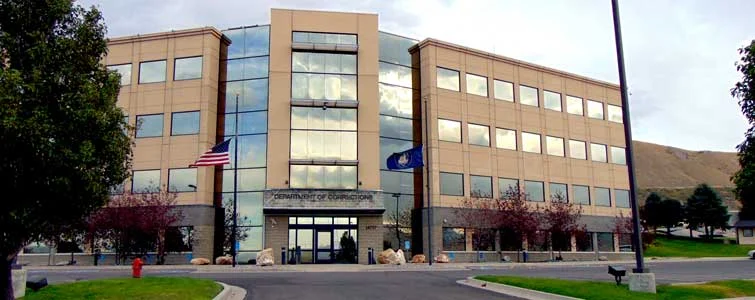
Five transgender inmates at Utah State Prison have filed a federal lawsuit against the Utah Department of Corrections and the Utah Department of Health & Human Services. They claim a new state law unlawfully denies them needed medical care and puts them at serious risk.
The lawsuit, filed in U.S. District Court in Salt Lake City, challenges House Bill 252, a measure passed by the Utah Legislature earlier this year that restricts medical care for transgender people while incarcerated. Plaintiffs Virginia Tucker, Stephanie Dombroski, Sandy Phillips, Dakota Grunwald, and Amberli K. Morrigan argue that the law has created a sweeping ban on gender-affirming medical treatment, including hormone therapy and gender reassignment surgery, without regard for individual medical need or clinical judgment.
The complaint says state agencies have put in place a “blanket ban on the initiation of hormone therapy without any consideration of Plaintiffs’ individualized medical needs and the medical judgment of Defendants’ own medical providers.” The inmates are represented by the American Civil Liberties Union of Utah and Lambda Legal.
Four of the plaintiffs are transgender women, and one is a transgender man. All five have been diagnosed with gender dysphoria, which the lawsuit calls a serious and well-known medical condition. The complaint says that if gender dysphoria is not treated or is treated poorly, it can cause severe psychological distress, depression, problems with daily life, self-harm, suicidal thoughts, and even death.
The lawsuit claims that since HB252 took effect in May, denial of needed medical treatment has gotten worse. The law stops people in prison from starting hormone therapy or gender-related surgeries, even if doctors say they are needed. It also requires housing placements based on sex assigned at birth, not gender identity.

The plaintiffs say the law goes against accepted medical standards and takes away prison doctors’ ability to use their own judgment. The lawsuit also says that while mental health services may still be available, counseling alone is not enough and does not follow established guidelines for treating gender dysphoria.
The plaintiffs claim that Utah’s policy breaks both the Eighth Amendment, which bans cruel and unusual punishment, and the Americans with Disabilities Act. They say transgender inmates are treated differently from others with medical conditions, whose care is not restricted by law.
Utah lawmakers passed HB252 amid national debates over transgender rights and access to gender-affirming care. Supporters argued it was necessary to establish uniform standards in correctional settings. Opponents warned it would endanger incarcerated transgender people and expose the state to costly litigation.
In a statement, Lambda Legal emphasized that longstanding U.S. Supreme Court precedent prohibits prisons from denying adequate medical care to incarcerated people.
“They single out only transgender people with gender dysphoria — the clinical distress experienced because of a difference between a person’s sex assigned at birth and gender identity — for denial of care,” said Sonja Kerr, an attorney with Lambda Legal.

“Our clients are suffering because the state has chosen to prohibit medically necessary care for the treatment of a validly recognized medical condition, regardless of their individual need,” said Abby Cook, an attorney for the ACLU of Utah. “We are challenging HB252 and Defendants’ policies to ensure that all transgender people receive the healthcare that the U.S. Constitution requires and are protected from unlawful discrimination.”
The lawsuit also notes that Utah’s prison system has faced federal scrutiny before. Morrigan had filed a complaint with the U.S. Department of Justice, which led to a DOJ lawsuit against the Utah Department of Corrections for alleged violations of the Americans with Disabilities Act. The new complaint says state agencies did not fix the problems found, and that HB252 has made things worse for transgender inmates.
Grunwald, who has been in prison longer than the other plaintiffs, was convicted of manslaughter in the death of Utah County Sheriff’s Sgt. Cory Wride. Grunwald was convicted under the name Meagan Dakota Grunwald, but recently asked the Utah Board of Pardons and Parole to use the name Dakota during a parole hearing held the same day the lawsuit was filed.
State agencies named in the lawsuit deny wrongdoing.
“The Utah Department of Corrections is committed to providing appropriate medical and mental health care for all residents, including transgender inmates,” the agency said in a statement. “We look forward to vigorously defending our high standard of care and full compliance with federal and state laws against this lawsuit.”
The Utah Department of Health & Human Services declined to comment, citing the pending litigation.