
In a significant decision on June 30, the U.S. Supreme Court declined to review a federal appeals court ruling in Kincaid v. Williams that extended protection against discrimination to individuals with gender dysphoria under the Americans With Disabilities Act.
“By declining to hear this case, the Supreme Court implicitly acknowledges what those who have seriously examined the issue have concluded: the ADA protects people who experience gender dysphoria, including transgender and nonbinary people, from being discriminated against on that basis,” Olivia Hunt, policy director for the National Center for Transgender Equality, told the Associated Press.
Justices Clarence Thomas and Samuel Alito dissented, writing, “The Fourth Circuit’s decision makes an important provision of a federal law inoperative and, given the broad reach of the ADA and the Rehabilitation Act, will have far-reaching and important effects across much of civil society in that Circuit … Voters in the affected States and the legislators they elect will lose the authority to decide how best to address the needs of transgender persons in single-sex facilities, dormitory housing, college sports, and the like.”
Alito also wrote that the ruling “will raise a host of important and sensitive questions regarding such matters as participation in women’s and girls’ sports, access to single-sex restrooms and housing, the use of traditional pronouns, and the administration of sex reassignment therapy (both the performance of surgery and the administration of hormones) by physicians and at hospitals that object to such treatment on religious or moral grounds.”
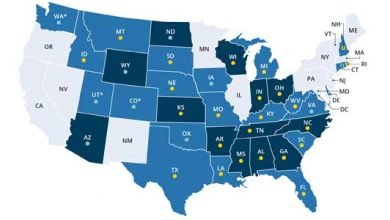
The decision currently only binds states within the 4th Circuit, which was the first federal appellate court to determine that the ADA protects transgender people experiencing gender dysphoria. The states include Maryland, North Carolina, South Carolina, Virginia, and West Virginia.

Transgender advocates hope the ruling will help defeat legislation that restricts access to gender-affirming medical care for transgender people.
“The overwhelming majority of Americans support nondiscrimination protections for LGBTQIA+ people, and today’s decision means the ADA remains a mechanism that can help our communities secure those protections,” Hunt said.
The case started when transgender woman Kesha Williams sued the Fairfax County sheriff in Virginia for her being forced to live in the men’s section of the jail because she had not had genital surgery. Williams, at the time, explained to a jail nurse that she had gender dysphoria and had been receiving hormone treatments for 15 years, the AP reported. The lawsuit states the jail’s policy is that inmates are classified according to their genitals.
The lawsuit also states that Williams was harassed by other inmates and guards and was denied requests to shower privately and to have body searches done by a female deputy, the AP reported.
The lawsuit was initially dismissed by a federal judge, who found the ADA excluded “gender identity disorders not resulting from physical impairments.” The 4th Circuit’s three-judge panel reversed the dismissal on the grounds there is a distinction between gender identity disorder and gender dysphoria.
The American Psychiatric Association removed gender identity disorder from the Diagnostic and Statistical Manual of Mental Disorders and added gender dysphoria, defined in the manual as the “clinically significant distress” felt by some transgender people.