
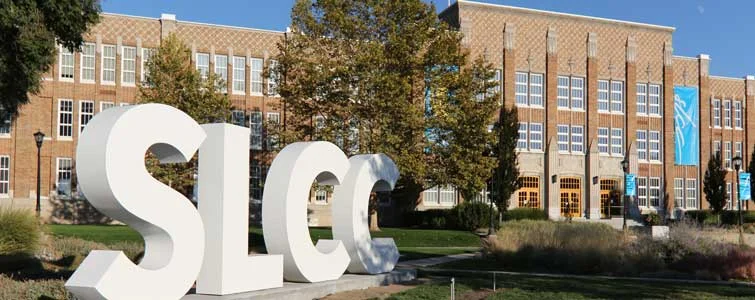
Still Standing: How SLCC’s Gender & Sexuality Center adapted in a shifting political landscape
As colleges across Utah and the nation shutter LGBTQ+ resource centers under mounting political pressure, Salt Lake Community College chose a different path: to adapt without erasing.
While state and federal mandates have forced dramatic changes in how diversity, equity, and inclusion programs operate, SLCC’s Gender and Sexuality Student Resource Center remains open — evolving, but still deeply committed to serving students of all identities.

SLCC Gender & Sexuality Student Resource Coordinator
At the heart of this work is Peter Moosman, who helped open the center in 2019 and now serves as both its manager and the college’s assistant director of cultural programming. From the beginning, the center has provided a welcoming lounge space, campus and community resources, and a wide array of events celebrating LGBTQ+ and women’s heritage.
“We’ve always served everyone,” Moosman told LGBTQNation in a personal capacity. “We were never checking IDs at the door. We’ve had straight students, cisgender students — anyone seeking support or connection.”
But change came fast and hard. In October 2024, the Utah legislature passed H.B. 261, banning any state-funded college from practices perceived as favoring one identity group over another. Just months later, the U.S. Department of Education issued a letter threatening to withhold federal funds from institutions with DEI-specific programming.

Under these new rules, even the celebration of LGBTQ+ History Month could be considered controversial if it highlights oppression or systemic power structures — concepts central to queer history.
Instead of closing its doors, SLCC made strategic shifts. Programming now focuses on the historical contributions and cultural achievements of LGBTQ+ people, rather than the discrimination they’ve faced.
“We can talk about how these communities are thriving. We can celebrate achievements,” Moosman explained. “We just can’t say, ‘Queer people are oppressed and need to be recognized.’”
It’s a frustrating reality, but one that Moosman and his team are meeting with creativity. The center’s previous LGBTQ+ awareness training has evolved into “Gender and Sexuality 101” — a program that explores cultural and biological aspects, building understanding before introducing queer-specific language.
“When we open with concepts like ‘power’ or ‘privilege,’ some people shut down,” Moosman said. “But when we use terms like ‘accessibility’ and ‘opportunity,’ people stay engaged. It’s a different entry point into the same conversation.”
Moosman knows not every institution has been able to pivot. Across the country, LGBTQ+ centers have been defunded, renamed, or completely eliminated. But he sees SLCC’s response as a potential blueprint — one that doesn’t ignore the law, but also doesn’t abandon queer students.
“These centers save lives. They serve students in ways they may not get anywhere else,” he said. “It’s heartbreaking to see them disappear. But it’s even more heartbreaking when institutions don’t even try to adapt — when they just give up.”
Moosman cites philosopher Cornel West’s idea of being “protean” — able to change form while holding true to purpose.
“That’s what this moment calls for,” he said. “To still show up. To still serve. To still exist — even if the language we use has to shift. We can still make impact. We just have to get creative.”
In a time when legislative mandates seek to erase conversations about identity and equity, SLCC’s Gender and Sexuality Student Resource Center offers a powerful counter-narrative: resilience, adaptability, and a continued commitment to belonging for all.