
Dallin H. Oaks to preside over LDS Church after Russell M. Nelson’s death; what it means for LGBTQ+ people
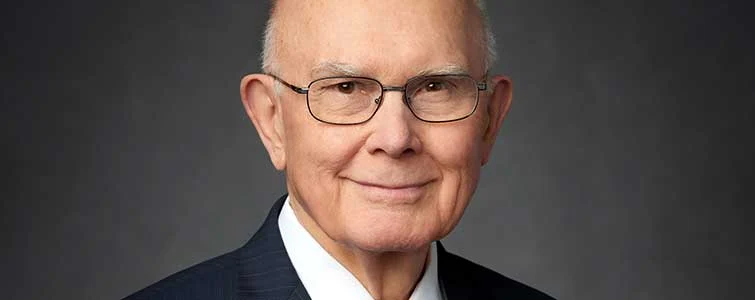
With the passing of President Russell M. Nelson, Dallin H. Oaks, his longtime second counselor and one of the most visible defenders of traditional Latter-day Saint teachings, assumed leadership of The Church of Jesus Christ of Latter-day Saints. His presidency is expected to mark a continuation of the Church’s modern era of careful balancing between compassion for LGBTQ members and adherence to doctrines that define marriage as exclusively between a man and a woman.
Oaks’ influence on these issues stretches back more than five decades. A former Utah Supreme Court justice and respected legal scholar, he served as president of Brigham Young University from 1971 to 1980, a time when the university maintained strict enforcement of Church standards on sexuality. Historical records show that university officials during that era investigated, counseled, and sometimes expelled students suspected of same-sex relationships, going so far as to search dorms and record license plates of gay bar patrons’ cars to determine if they were BYU students.
During the 1970s, BYU psychology researchers conducted studies using “aversion therapy,” a now-discredited psychological approach that sought to alter same-sex attraction through techniques like electric shock and induced nausea. A 1976 dissertation documented these methods, approved under then-existing university protocols. Oaks has since said that such practices had been discontinued by the time he became president and were not carried out under his administration. Archival records indicate overlap between his early tenure and the later years of those experiments, though there is no evidence he directly ordered or oversaw them. Still, that period remains a point of pain for many gay alumni, who see it as emblematic of the broader institutional rejection they faced.
After joining the Church’s Quorum of the Twelve Apostles in 1984, Oaks became one of the primary voices articulating the Church’s stance on family and gender issues. Over the decades, he has delivered some of the most definitive addresses on what he calls “the laws of God.” He has stated repeatedly that gender is “an essential characteristic of individual premortal, mortal, and eternal identity,” and that marriage between a man and a woman is central to God’s plan for humanity. In a 2018 General Conference talk, Oaks warned that societal efforts to “confuse gender” and “distort marriage” run counter to divine principles.
Oaks’ tone has drawn criticism from LGBTQ members and allies who see his remarks as alienating. Yet within the Church, he is also viewed as a leader who insists on compassion even as he upholds doctrine. He has counseled members to show respect and love toward LGBTQ individuals, emphasizing that disagreement over moral or religious issues should never lead to cruelty or exclusion.

In 2015, the Church adopted a policy labeling same-sex marriage as “apostasy” and barring the children of such couples from baptism without special approval. Oaks supported that decision, later describing it as a protective measure meant to avoid placing children in conflict between their family relationships and Church teachings. The policy prompted significant backlash from members and widespread resignations from the Church.
Four years later, in 2019, the First Presidency, under Nelson’s leadership and with Oaks as first counselor, announced a reversal. The Church again allowed local bishops to approve baptisms for children of same-sex couples and dropped the label of “apostasy” for those in same-sex marriages. The policy change, described by Church leaders as “love-motivated,” was widely seen as an attempt to heal the wounds of the 2015 decision without altering core doctrine.
Oaks also played a central role in clarifying Church policy toward transgender members. A 2020 update to the General Handbook outlined that while transgender individuals should be treated with kindness and respect, gender transitions and surgeries remain incompatible with full participation in certain ordinances and callings.
In 2022, Oaks spoke publicly about the Church’s support for the federal Respect for Marriage Act, which legalized same-sex marriage nationwide while reinforcing religious-freedom protections. He explained that the Church’s endorsement was not an acceptance of same-sex marriage itself but a recognition of the law’s safeguarding of the Church’s right to define marriage within its own faith community.
As he assumes the presidency, Oaks faces both continuity and challenge. Many expect him to maintain the firm doctrinal lines that have defined his career, yet some observers hope he will pair that conviction with greater openness toward dialogue and understanding. For LGBTQ Latter-day Saints and their families, his leadership evokes both apprehension and cautious hope that the Church might one day reconcile its deeply held theology with the lived realities of queer members who continue to seek belonging within it.
LDS President Russell M. Nelson’s record on LGBTQ issues
As president of The Church of Jesus Christ of Latter-day Saints from 2018 until his death on Sept. 27, 2025, Russell M. Nelson presided over a turbulent era for the faith’s relationship with LGBTQ members, marked by a controversial policy, its reversal, and a continued defense of traditional teachings on marriage and gender.
The Church’s conflict with LGBTQ inclusion reached a peak in November 2015, when a policy update classified members in same-sex marriages as “apostates” and barred their children from baptism or naming blessings without top-level approval. At the time, Nelson served as a senior apostle and later described the move as a “revelation from God,” meant to protect children from potential conflict between church teachings and their parents’ relationships. The decision drew widespread backlash and caused deep pain among LGBTQ Latter-day Saints and their families.
After Nelson became Church president in January 2018, the First Presidency reversed key parts of the policy in April 2019. Local bishops were again allowed to approve baptisms for children of same-sex couples, and those couples were no longer automatically labeled apostates. Announcing the change, Church leaders called it “love-motivated,” saying homosexual behavior would now be treated the same as heterosexual immorality under Church discipline.
In a widely covered 2019 devotional at Brigham Young University titled “The Love and Laws of God,” Nelson explained both the original policy and its reversal. He said the Church’s teachings on marriage and sexuality are based on divine law, not social trends, and urged members to pray for personal confirmation that leaders act under revelation. While reaffirming that marriage is ordained by God between a man and a woman, Nelson also emphasized that “God loves all His children.”
Nelson acknowledged that the 2015 policy and its aftermath caused “confusion, concern, and heartache.” In a gesture of empathy, he said, “Whenever the sons and daughters of God weep, for whatever reasons, we weep.”
Under his leadership, the Church also clarified its stance on transgender members. A 2020 update to the Church’s General Handbook instructed local leaders to treat transgender people with kindness and respect while maintaining restrictions on gender-affirming medical or social transitions in Church participation and ordinances.
In 2022, the Church publicly expressed appreciation for the U.S. Respect for Marriage Act, which codified same-sex marriage at the federal level, while praising the law’s religious-freedom protections. The Church reiterated that its doctrine defining marriage as between a man and a woman “will not change,” even as it pledged to coexist peacefully within civil law.
Nelson’s record reflects the Church’s ongoing struggle to reconcile doctrinal consistency with compassion for LGBTQ members. Though the 2019 reversal softened the most contentious policy of the past decade, the faith’s core teachings on marriage and gender identity remain firmly in place.