
Pride Elevated: Utah Pride 2026 expands its vision with more youth programming, new traditions and a statewide call for connection
As rainbow flags begin to appear across Salt Lake City and teams prepare for one of the state’s largest public celebrations, organizers of the 2026 Utah Pride celebration say this year is about more than just bigger crowds or louder parties.
It is about elevation.
Under the theme “Pride Elevated,” Utah Pride is returning in June with an expanded slate of programming that organizers say reflects the changing needs of Utah’s LGBTQIA+ community, from youth spaces and memorial installations to nightlife experiences, civic ceremonies, and renewed alliances with organizations across the state.
Produced by the Utah Pride Center, Utah Pride has long been both a celebration and a political statement in a state where LGBTQ+ visibility has often required fortitude and persistence. Now entering another chapter within its decades-long history, organizers say the 2026 celebration is intentionally expanding its mission of connection, inclusion, and accessibility.
“This year’s festival is about elevation in every sense,” said Chad Call, executive director of Utah Pride and the Utah Pride Center. “We’re elevating community voices, elevating experiences, and elevating chances for connection among generations, identities, and organizations.”

The annual celebration — which includes the Utah Pride Rally & March, Festival and Parade — is expected once again to draw tens of thousands of attendees to downtown Salt Lake City during the weekend of June 6–7. But this year’s programming extends well beyond the traditional festival footprint, beginning earlier in the week and reaching into communities throughout the state.
A Theme Rooted in Utah Identity
The “Pride Elevated” theme intentionally echoes Utah’s long-running tourism slogan, “Life Elevated,” while reframing it through the lens of LGBTQIA+ sense of self and community.
For organizers, the phrase represents both celebration and aspiration, recognizing how far Utah’s LGBTQ+ community has come and acknowledging the work that remains.
That duality is woven throughout this year’s programming. The 2026 festival lineup balances large-scale entertainment with spaces focused on remembrance, youth support, advocacy, and community care.
In Utah, where debates around transgender rights, education policies, and LGBTQIA+ protections are a large part of the political discourse, Pride organizers say visibility remains critical.
At the same time, they say that joy itself is also a form of resistance.
A New Fundraising Tradition Begins
One of the biggest additions to the 2026 calendar is the inaugural Utah Pride Directors’ Reception, scheduled for June 3 at the rooftop venue of the Salt Lake City Main Library.
The event marks Utah Pride’s newest effort to expand community financial support for LGBTQ+ programming while offering what organizers describe as a more accessible alternative to a traditional formal gala.
Tickets are priced at $100, with proceeds supporting the long-term sustainability of programs operated through the Utah Pride Center.
The evening will also introduce several new community honors designed to recognize service, advocacy, and lasting impact.
Among them is the debut of the Bruce Bastian Legacy Award, named after the late philanthropist and LGBTQ+ advocate. In its inaugural year, the award will be presented posthumously to Bastian himself, honoring his decades of support for LGBTQ+ causes in Utah.
Bastian, a co-founder of WordPerfect who later became one of Utah’s most significant LGBTQ+ philanthropists, played a central role in funding equal rights initiatives, community organizations, and educational efforts across the state. His support helped shape much of modern LGBTQ advocacy infrastructure in Utah.
Additional awards include Volunteer of the Year, Community Organization of the Year, and the Dr. Kristen Ries Community Service Award, named after pioneering Utah physician Kristen Ries, whose work during the HIV/AIDS crisis made her one of the most respected figures in Utah LGBTQ+ history.
With the awards ceremony, Utah Pride aims to preserve intergenerational community memory while also spotlighting emerging leaders and organizations.
Foam, Dance Floors, and Celebration
While much of Pride’s history is rooted in protest and political activism, celebration remains central to the experience — and Utah Pride organizers are leaning into that energy in 2026 with the launch of a new nightlife event.
The inaugural Opening Night Foam Party will kick off Pride weekend on Friday, June 5, at Washington Square.
Designed as a 21-and-over event, the party aims to create a high-energy communal dance experience featuring local DJs, immersive lighting, and, of course, foam.
Organizers describe it as Utah Pride’s attempt to establish a signature nightlife event that captures the exuberance and freedom often associated with Pride celebrations around the world.
Admission is $30 and includes one complimentary beverage.
The event also signals Utah Pride’s effort to diversify experiences within the festival itself by creating spaces that appeal to different age groups, interests, and social experiences rather than solely a “one-size-fits-all” model.
The Return of the Youth Zone
Perhaps the most anticipated development for many families and younger attendees is the return of the Youth Zone after a two-year hiatus.
The dedicated area for LGBTQIA+ youth and affirming family programming had previously been paused due to staffing and resource challenges. Its reintroduction in 2026 comes through a partnership with Davis County Pride, which is helping provide programming support.
For many community members, the return carries symbolic significance at a time when LGBTQ youth issues remain highly politicized nationwide.
Organizers say the Youth Zone is intended to provide a safe, affirming, and joyful environment where younger attendees may engage with Pride in age-appropriate ways while connecting with peers, families, and supportive organizations.
“We’re proud to partner with Utah Pride to help bring back the Youth Zone and create intentional, affirming space for LGBTQIA+ youth and families during festival weekend,” said Davis County Pride’s Jake Boyle. “Being invited into the programming of this space reflects what true community partnership looks like — organizations working together, sharing expertise, and showing up for youth in meaningful ways.”
The Youth Dance, which debuted successfully in 2025, is also returning with a major change. Rather than operating as a separate Friday-night event, the dance will now take place inside the festival grounds on Saturday evening, June 6, within the Youth Zone itself.
Open to LGBTQIA+ teens ages 13 to 17, the dance offers a rare dedicated social space for queer youth in Utah, one many adults in the community say they wish they had growing up.
This year, admission to the Youth Dance is included with the purchase of a festival youth ticket, eliminating the need for a separate fee and making participation more accessible.
Honoring Loss and Memory
Alongside celebration and entertainment, Utah Pride 2026 will also create space for reflection through a partnership with The Glitter Foundation.
The organization will bring its Transgender Day of Remembrance Memorial installation to the festival grounds during Pride weekend.
The installation honors transgender individuals lost to anti-trans violence and provides attendees with a place for remembrance and contemplation amid the larger festivities.
In recent years, anti-trans legislation and rhetoric have intensified nationally, including in Utah. Organizers say incorporating the memorial installation into Pride weekend acknowledges both the vulnerabilities and resilience of the transgender community.
“The opportunity to share this installation during Utah Pride helps ensure the stories and lives represented here are honored, remembered, and witnessed by thousands of community members and allies,” said Glitter Foundation’s Dallas Rivas.
The inclusion of the memorial installation shows that Pride can simultaneously hold joy, grief, celebration, and activism.
Pride Beyond Downtown
Another major initiative launching in 2026 is Paint the Town Rainbow, a statewide visibility campaign encouraging businesses, organizations, and residents to decorate storefronts, offices, and public spaces throughout Pride Month.
The initiative aims to expand Pride’s visibility beyond downtown Salt Lake City and into communities across Utah, creating visible signals of inclusion and support, particularly in areas where LGBTQ residents may feel isolated or underrepresented.
In practice, that could mean rainbow window displays at small-town businesses, Pride-themed decorations in office spaces, or public-facing messages of solidarity throughout June and beyond.
The Activist Roots Remain
Even as Utah Pride expands its entertainment offerings and community programming, organizers say the event’s activist foundations remain central.
That tradition will again be visible during the Utah Pride Rally & March on Saturday morning at the Utah State Capitol.
The annual march, which travels from the Capitol to the festival grounds, has long served as one of the state’s most visible demonstrations of LGBTQ political presence.
This year’s rally will feature speakers from several prominent advocacy organizations, including Equality Utah Executive Director Essie Gonzen and UAF Legacy Health Executive Director Christopher Everett.
The event’s continued emphasis on advocacy comes during a period of heightened concern for many LGBTQ Utahns, particularly transgender residents and queer youth.
Over the past several years, Utah lawmakers have debated or enacted legislation affecting transgender participation in sports, gender-affirming care, and school-related LGBTQ issues. Those policy battles have reinforced the role Pride continues to play as both celebration and civic demonstration.
For many longtime attendees, the march remains the emotional core of the weekend.
Washington Square Becomes the Heart of Pride
Following the rally and march, Washington Square will once again transform into the center of Utah Pride activity for the two-day festival.
Live entertainment, exhibitors, community organizations, food vendors, and local performers will fill the downtown space on Saturday and Sunday.
Festival organizers say the goal is to create a multi-generational experience — one where longtime activists, first-time attendees, families, allies, and queer youth all feel represented.
The festival has evolved dramatically over the years from its earlier, smaller-scale roots. Today, it acts not only as a social gathering but also as a critical networking and outreach hub for LGBTQ-serving organizations, healthcare providers, advocacy groups, and affirming businesses.
For many attendees, Pride weekend offers access to resources and connections that may be difficult to find elsewhere.
The festival also remains an important economic engine for local LGBTQ-owned businesses, artists, and performers who rely on Pride crowds to build visibility and income.
The Parade That Closes the Weekend
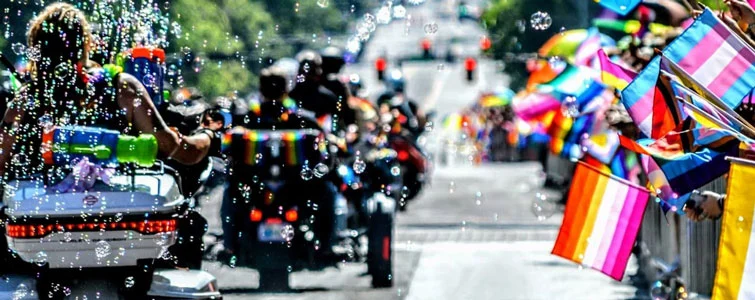
The Utah Pride Parade will conclude the weekend on Sunday morning, June 7, taking over downtown Salt Lake City with thousands of marchers, performers, businesses, and community organizations.
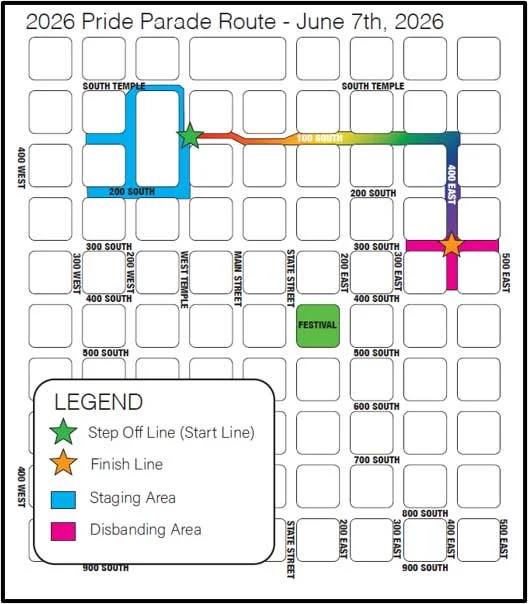
As one of the largest parades in the Mountain West, the event has become both a regional attraction and a highly visible statement of LGBTQ+ presence in Utah.
The parade will once again be kicked off by the Dykes on Bikes contingent, followed by colorful floats, marching groups, performers, and community representatives traveling along First South from the area around Temple Square through Fourth East, where it turns south to its culmination on Third South.
For many Utahns, the parade remains highly personal.
Some attend as longtime activists who remember earlier decades when public LGBTQ visibility carried greater risks. Others come as newly out individuals attending their first Pride. Many families attend to support children, siblings, or parents.
That emotional breadth is part of what organizers say makes Utah Pride unique.
Faith and Civic Traditions Continue
Beyond festival programming, several longstanding community-led events will again anchor the week’s opening days.
The Pride Flag Raising Ceremony on June 3 at Washington Square, hosted by the Salt Lake City Mayor’s Office, will officially launch Pride week with the raising of the Sego Belonging flag.
The annual ceremony has become an increasingly important civic symbol, publicly affirming the city’s support for LGBTQ residents.
Meanwhile, the Interfaith Worship Service on June 4 at First Baptist Church will bring together affirming faith communities for an evening centered on reflection, healing, and inclusion.
In Utah — where religion and LGBTQ identity have historically often been framed in tension — the continued presence of affirming faith leaders during Pride week carries particular resonance for many attendees.
Pride’s Continuing Evolution
As Utah Pride enters 2026, organizers say the event’s growth reflects the broader changes within Utah’s LGBTQ community itself.
What began decades ago primarily as a march for visibility has evolved into an expansive, multi-dimensional cultural event encompassing activism, remembrance, nightlife, youth engagement, spirituality, healthcare outreach, and community building.
At the same time, many of the main motivations behind Pride remain unchanged: Visibility still matters. Safe spaces still matter. Community still matters.
This year’s “Pride Elevated” theme ultimately captures that balancing act, honoring the movement’s past while imagining broader possibilities for its future.
To get involved:
Volunteer at: utahpride.org/volunteer
Tickets at: utahpride.org/tickets
Sponsor at: utahpride.org/become-a-sponsor